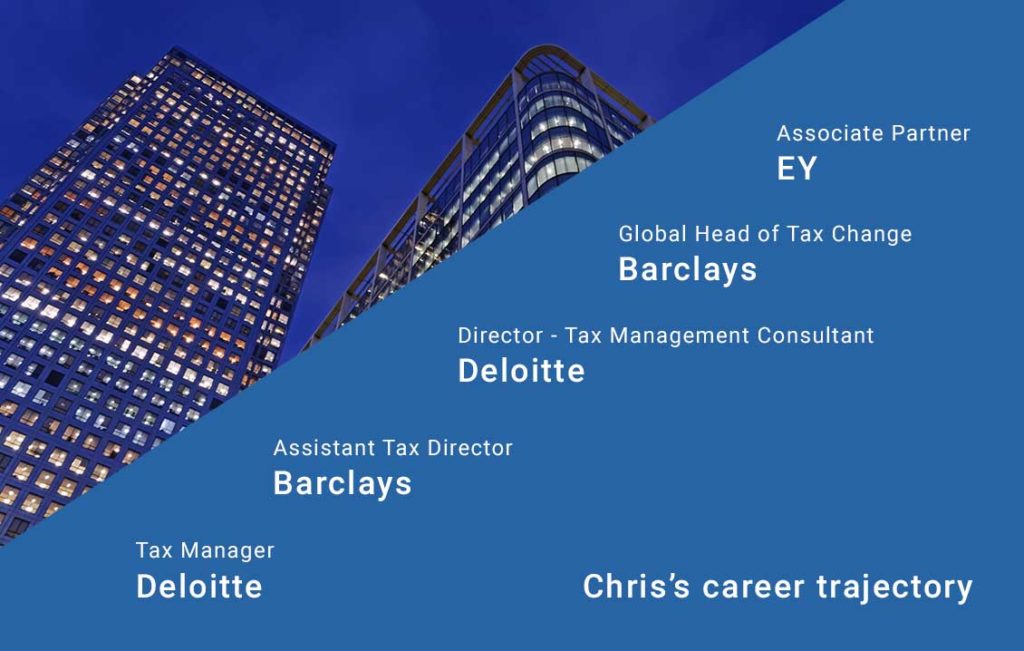
How has Chris McCandless, Associate Partner at EY, moved between in-house roles and practice and what can fellow tax professionals learn from his career? We spoke to Chris about the naysayers who questioned his focus on tax process and technology, the importance of mentors and the changing skills needed for a successful career in tax.

Top career tips for tax professionals
“Like a lot of career moves, my first big break was about being in the right place. I was offered a secondment into Barclays whilst still working in profession: focusing on tax process, technology and compliance.
Lesson one:
Being well networked is key, many opportunities are random, the more people you know the more likely you’ll get those chances.
In many ways, it was a natural shift from practice and there were similarities between working at a practice firm and Barclays in terms of the challenge, people and size of the team. However, it’s impossible to understand what it’s like to navigate the complexities of working in industry, from politics to navigating how you actually get things done, unless you actually try it!
Lesson two:
Create an opportunity to work in industry, it will enable you to better solve clients’ problems.
My first stint at Barclays gave me the chance to basically rebuild part of the department. It was a huge motivator to me, using what I knew but learning new skills at the same time. I’ve never forgotten the tax director who gave me that opportunity.
In practice, I did enjoy tax advisory and the legal side of things but I was really drawn to the process. People thought I was mad!
A lot of people I know who work in practice see themselves as ‘the tax law guy’ or the ‘technology person’ but in industry, it’s harder to separate out.
What tax professionals do in industry every day as part of the tax process is a combination of looking at the law, sourcing data and using technology. I liked that fusion of both law and tech. It’s still a relatively unique set of skills having that blended, holistic approach to tax. That has underpinned my career.
Lesson three:
Be a rounded tax professional not just the ‘tax law person’
After we developed the tax team at Barclays and the transformation element eased off, I wasn’t quite ready to focus on a business as usual role and went back to Deloitte to apply my learning to other clients.
Four years later I had the opportunity to meet the new tax director at Barclays. He’d just moved from GE and was very focused on tech, process, controls and risk management. He gave me the opportunity to set up a change and technology function to serve Barclays globally. It was one of the most enjoyable roles in my career.
Lesson four:
Make friends, Chris met the tax director through one of his friends from his first stint at Barclays
The role was very similar to working in professions as I had to sell ideas, present a vision, convince people to spend money and get projects delivered. I moved away from tax during that time.
I had the opportunity to work on an operating model transformation project – bringing teams together and centralising functions. At the end of that project, the then head of tax said why don’t you lead both the tax and change teams? I thought about it over the weekend and threw myself into it feet first!
On paper, I’d never have got this job. He recognised my blend of technology and tax skills when people were saying: “I didn’t even know you were a tax person Chris!”
Lesson five:
Be bold – take a business risk with your career and give stretch opportunities to people in your teams.
That role was a validation of the skills required in a 21st-century tax department. The last ten years have really seen a shift from tax planning to tax professionals becoming managers of risk and it’s also become incredibly data-driven and tech-focused.
So the people you need to staff a tax department changed and is still changing. My blend of skills were suddenly really in demand. The naysayers definitely thought the decisions I was making were odd but this job really brought everything full circle.
This role took me back into practising tax at a time of huge cost pressures. I was constantly challenging how things were done and using technology and data to help us survive when headcount was reducing but work was increasing.
I was then able to hire more tech people and systems administrators which was a different dynamic. Now you need tax people who understand tech, that is key. A balanced team with a variety of perspectives is crucial.
You will see a lot of things like this through your career that make you think “I never understand why we do it this way.” Call those things out. That’s career-defining.
Lesson six:
Challenge the status quo, most careers are made on the 5% that was exceptional and that takes a different way of thinking.
I then took some time off when my wife was unwell and when I started looking for new opportunities I saw that EY had just made a £1bn investment in tech and artificial intelligence (AI). This was very appealing to me – I’ve been there 10 months now as a partner focusing on tax and transformation.
Client needs are shifting and the tax skills of old are no longer enough. One of the things I’ve done is work with our data analytics team to bring together the skills within tax and AI. It’s a different approach to just leaving tax people to figure out AI! This is a new recruitment focus for us.
Tax is changing and the world of today is not what it will be in five or ten years. Embrace the opportunity to learn. Be open-minded – our job is to help clients so don’t worry about where the line sits between tech and tax.
Lesson seven
Be open to change, whether you’re looking for a role or hiring for your tax team
I’m in formal mentoring schemes at EY now – but actually it doesn’t have to be a formal relationship for you to get that much needed sounding board. I have several mentors – although none of those people might recognise that officially.
I go for a drink with a work friend and that’s a mentor relationship to me. Almost without exception, everyone says yes to going for a drink or to formal mentoring. It’s important not to have a self-imposed barrier, thinking you aren’t good enough to talk to senior people. Everyone is there to do a great job and you have permission to do a great job too.
Reverse mentoring with those at an earlier career stage can also be extremely valuable. I had an 18-year-old colleague who I supposedly mentor but her perspective is so different to mine that she’s actually been an amazing mentor to me.
Lesson eight
Draw on an eclectic mix of mentors – don’t get lost in the Canary Wharf bubble
Despite tech being at the heart of tax now, it’s important not to forget the impact on people. There’s such high competition to recruit the best graduates and the best tax professionals that being able to use tech to improve the employee proposition is critical. Even down to taking out some of the less enjoyable parts of the role – this really helps with retention. No one wants to sweat over a spreadsheet anymore.
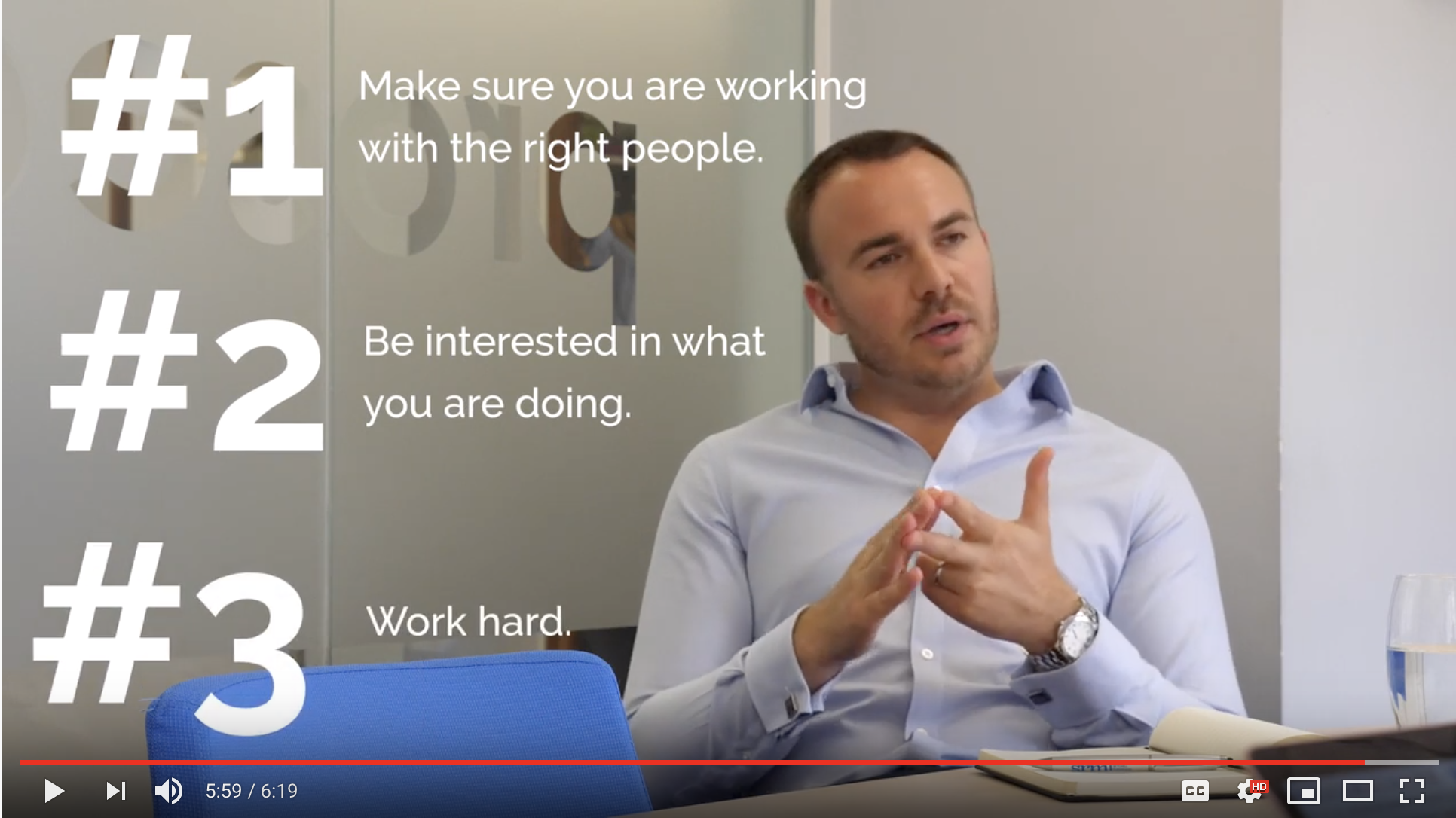
In summary, the key thing I’ve learnt through my career is that it’s our job as tax professionals to solve problems – it could be data or legal. Keep that focus and put people and relationships at the heart of what you do and you’ll be successful.
I would also say embrace tech and data – it’s not going away. Using AI to drive things like tax classifications is reducing risks for clients and we’ll see more of this. The opportunities are endless.”
Read more about successful leaders – follow Chand Chadasuma’s advice on rising to partnership level in corporate finance. Or if you feel ready to discuss your next career opportunity in Tax, or you’re looking for talent to fill a role in your organisation, please get in touch with Rory MacSween, Director, Tax Recruitment today on +44 (0) 20 3637 7808 or connect with him on Linkedin.
Articles you may like
Seven ways to tackle unconscious bias in tax and finance
Lessons learned from a career in tax from Henning Lauritsen
The future of tax