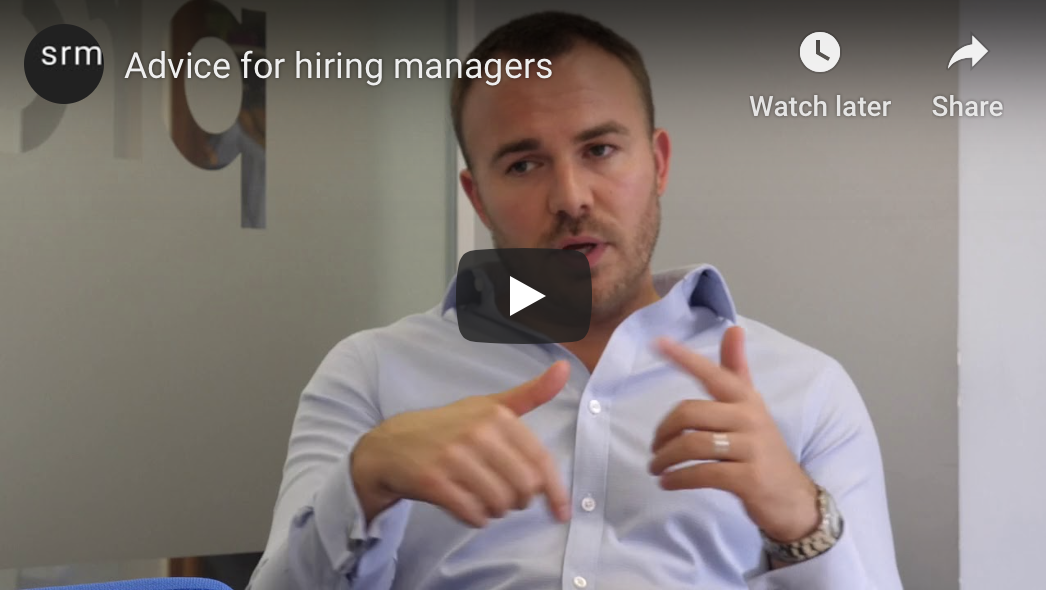
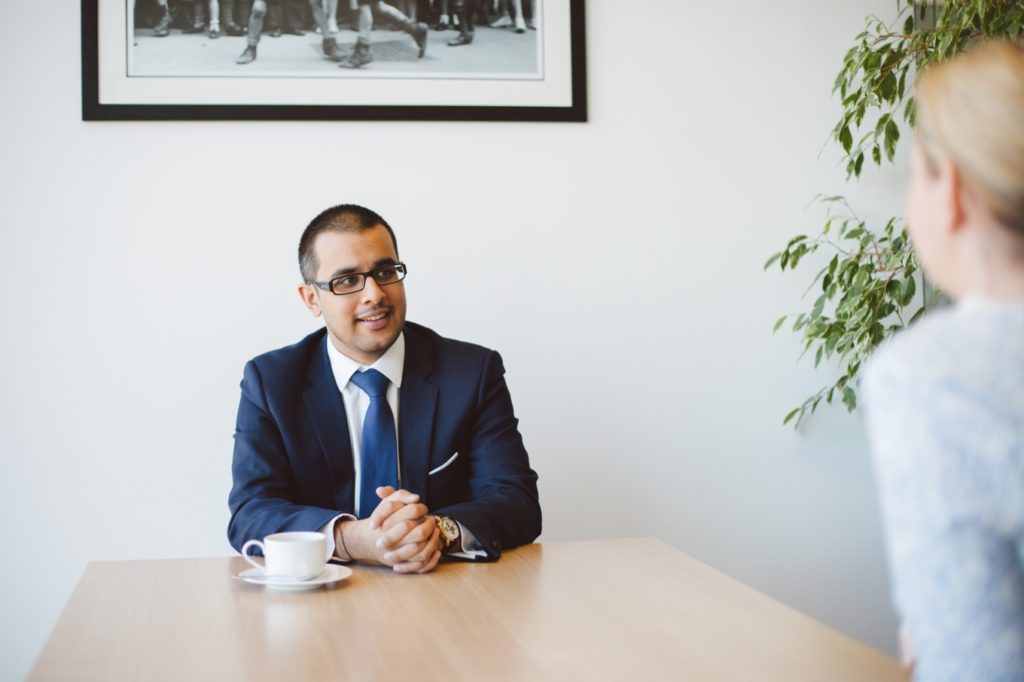
Honesty, timely communication and attention to detail are just some of the attributes our clients appreciate from our service. In this short video, SRM Recruitment asks our client, Richard Nordgreen, Head of Investments at Proseed Capital, to share his thoughts on what it’s like working with us.
https://www.youtube.com/watch?v=35Htu7p-PPs
Richard Nordgreen, Head of Investments at Proseed Capital
Henning Lauritsen is a leader in the tax profession and has created internal tax teams for a number of large international companies. Having worked with Henning to build the tax team at Wyelands Capital, SRM Recruitment asks for Henning’s advice on how to build a tax team from scratch.
What kind of people should you look for?
It’s critical to source people who understand how to work with the business if you want to successfully build a tax team from scratch. Of course, a tax professional needs to understand compliance, but they need something more than that. It goes beyond being up to date with operations, they have to really understand the business approach.
When we set up the tax team at Wyelands Capital, we partnered with SRM Recruitment because we wanted to build a thinking tax team, not an operational tax team. We partnered to create a strategy, which was approved by the CFO, and SRM helped me to fill a number of roles. In the past, the Group’s tax department was too operational – we wanted to be real advisers. Now, the team are in place and my boss has relocated so we’ll be even closer moving forward. It’s fundamental to work closely together so the senior management can understand tax.
I think it’s more important to find balance in your team than to try and hire the ‘perfect candidate’ on paper. When we were creating our tax team at Wyelands Capital, we had some very strong theoretical tax knowledge, but we needed someone who brought more practical experience. We sourced a candidate from South Africa who had really strong practical skills, and this complemented the strengths others had. You have to think of the team as a whole.
How do you run your team?
We have one central Group tax department, but we also have satellite tax departments in Bucharest, Ostrava, Sydney and Dallas. The local knowledge is invaluable, and it keeps the dynamic fun – they love visiting the London team, and vice versa. I have always tried to set up tax teams to reflect the countries we are operating in, as well as having a gender-balanced, multicultural team. When you have the opportunity to build a tax team from scratch, I think it’s important to mirror the real-world environment and have that diversity.
In terms of rewards, teamwork is key, so for example, a bonus wouldn’t be awarded unless people work well together. They don’t have to like each other – that doesn’t matter in our department – but everyone must cooperate. I have a strong belief in the power of the team.
We hold a weekly meeting to ask everyone what they’re working on. This is also a great opportunity to share our knowledge with the business, by inviting colleagues from other disciplines e.g. procurement to talk about what they are doing and how we can help.
How can you work most effectively with tax authorities like HMRC?
The first thing to understand is that tax authorities do want to work with you. By having an honest, respectful dialogue, you can work more effectively. For example, in Malaysia, we advised the authorities that we couldn’t work to their timetable, and also that our system is approximately correct (we called it our 80% rule.) That is not unusual by the way – no matter how much you go into the detail, something will always be wrong. So, we try to be practical and realistic and explain any limitations. It actually helps us be more accurate because we are not sweating the ‘small’ stuff but making sure we are putting time into what really matters. We explained we were following OECD guidelines, and they understood.
We have a good relationship with HMRC because we are open and transparent. They joined us at a risk review and we had a very good meeting. They don’t actually like court cases – they want to solve problems.
It’s really just a case of being good corporate citizens – and not just the tax department. We’re here to help and assist, and by doing so we protect our business.
When do you bring in external expertise?
We do need to use outside experts from time to time. We did an acquisition in seven countries and to aid our understanding we used the regional PWC advisors to do the local due diligence work. We know when to ask for help and use external advisors for difficult situations.
Partnering with SRM Recruitment to build our tax team from scratch was a good use of external expertise to find the best talent for our roles. SRM acted as true consultants to our business and helped shape our hiring strategy, as well as filling the positions.
If you are planning to build or expand your tax team, please contact us to discuss your needs. For more information about Henning’s career and for his thoughts on the Future of Tax, visit our Insights section.
In the first of a series of video interviews, SRM Recruitment asks one of our clients, Richard Nordgreen, Head of Investments at Proseed Capital, for his advice for hiring managers seeking to grow their teams, and about the management style he has adopted to achieve success.
https://www.youtube.com/watch?v=4jQlIw0pOqk&t=19s
Richard Nordgreen, Head of Investments at Proseed Capital
How does SRM Recruitment go the extra mile for its clients? We find out by asking one of them. Ed Barroll-Brown is a Founder and Partner at Grafton Capital, a private equity firm based in London.
“SRM Recruitment has placed two roles for us over the last year. The first was a CFO for a fin-tech portfolio company, and the other was an in-house accountant for our own business.
Ed Barroll-Brown, Founder and Partner at Grafton Capital
“We wouldn’t hesitate in recommending SRM Recruitment’s services.”
Ed Barroll-Brown, Founder and Partner at Grafton Capital
We were very impressed and pleased with the level of attention and care that these mandates received. Stewart, in particular, gave each role a lot of thought and provided a higher level of screening and insight than we have received from other firms.
SRM also offered a flexible approach, which was both efficient and cost effective for us and, most importantly, they delivered.”
Corporate Finance professionals must be able to keep up with emerging trends to best advise their clients. But what lies ahead for the sector itself and how are skillsets changing? Here to shed some light on the future of corporate finance is Chand Chudasama, Strategy & Corporate Finance Partner at Price Bailey.
How has technology and data changed Corporate Finance and Strategy?
Undoubtedly there’s a huge amount of data out there, and most corporate finance and strategy outfits have bought access to it through aggregators. It’s inexcusable to ignore the data that’s there. However, it’s not enough.
Whilst the quantity and quality of the data available is increasing, the clients themselves are gaining their own commercial rigour. Many have come from industry and, armed with this easily-accessible data, in many cases their insight is better than the consultants’.
Combine this trend with the fact that many corporate finance forecasts are still based on optimistic growth assumptions that lack data-driven evidence – you see projections of revenue and margin going up, which looks great, but isn’t an accurate picture.
To keep pace, and to stand out in a competitive market, we need to do something different. When I took over the strategy team at Price Bailey, I wanted to create an insights and research team that took an innovative approach. We now focus on building primary market research into how a business could grow in different markets, and how it could be valued as a result. For example, we do price and market testing around the world, turning that evidence into projections that have a real rationale behind them. It’s a combination of qualitative and quantitative data that offers a far more credible and useful picture to the client.
What about further into the future of corporate finance, what might be three things to look out for?
It’s a continuation of what we just discussed:
The amount of data will increase but the number of people who can connect that to value creation will fall. Data will proliferate but people will focus too much on that and forget to ask the ‘so what’ questions.
As clients become savvier about corporate finance, consultants will need to expand their knowledge to stay one step ahead and continue adding value. Traditional advisors who have only ever worked in finance will struggle to command premium fees, as we see a rise in recruits joining the business from outside the industry and bringing skills such as sales, marketing and increasingly, technology. We’ll still need lots of ACAs, but the expectation will shift and people will need to demonstrate complementary skills.
If advisors can’t think on a global scale, they will struggle. If I think of the international deals we do now, compared to six years ago, the number has increased exponentially. We have embraced that, and we use technology and support teams to facilitate our work. If you can’t think globally, you’ll be limited in your growth and miss out on huge opportunities.
What has been the impact of alternate finance, and how do you keep up with this?
I’m excited to see what the alternative lenders are going to provide in the near and long term future, because I really believe that alternative finance is the right thing for the growth of the British economy and for our businesses. For early-stage companies, alternative financiers can be very effective on the debt and equity side to provide funding.
It’s an area where Britain is lagging behind. In France, we see capital trusts doing a great job of leveraging alternative funding for businesses in their early stages of growth. The issue is that this is a challenging area, where the risk is high and we need more people to back alternative funding in order to reach a critical mass. I understand why alternative financiers might not want to fund that space, it’s risky so it’s hard to make it work.
To learn more about Chand’s rise to success, don’t miss his ‘10 Lessons Learned on the Path to Partner’. If you feel ready to discuss your next career opportunity in Corporate Finance, or you’re looking for talent to fill a role in your organisation, please get in touch.
Henning Lauritsen, Acting Head of Tax at Wyelands Capital (GFG Alliance)
Henning Lauritsen is Acting Head of Tax at Wyelands Capital (GFG Alliance). Originally from Denmark, Henning started in international tax at petrochemicals company Borealis. He started Carlsberg’s tax team from scratch, and since then has led several global organisations through periods of transition and merger. In the latest of our ‘Lessons from Leaders’ series, we find out what Henning has learned from his career in tax.
How did you arrive at your current role?
In 2009 I was working in Hong Kong for a global commodity group. I travelled a lot – it felt like I went around the world in two weeks. Jules Verne had nothing on me! It was a very interesting company, but jet lag plagued me.
I moved to London for a new role, where I set up the global tax department. I was still travelling, visiting the US and parts of Asia to get closer to the business. When they closed the London office in 2017, I wanted to remain in the City.
Around that time, the GFG Alliance called me and asked me to focus on their M&A business – Wyelands Capital. They did things differently there, and it seemed like a great opportunity to learn, so I joined them as Acting Head of Tax. It’s a year since I started – I think they still like me!
You’ve had a very successful career in tax – what has driven your progress?
It sounds like a contradiction, but I think I have survived by not becoming too focused on the tax world. You have to understand the connections an organisation has within and outside itself, and then to work with the business to translate tax into their language. It’s just as important to understand accounting and cross-border challenges, as it is to understand people and cooperate with them.
To be successful, a tax leader cannot operate alone, and I’m a big believer in synergy. One person can dig a ditch of three metres in two hours but two people can dig seven or eight metres of ditch at the same time. That’s the power of the team.
What lessons have you learned as a tax leader?
There are three main lessons I would share with someone wanting to pursue a successful career in tax:
It’s important to be a good leader. This means working as a team – you’re only as strong as the weakest link. You have to take care of people, lead and guide them, then they will deliver.
You must think broadly. I analyse the company accounts. That’s not my job, but I proactively look for anomalies, such as the effective tax rate, so I can spot any errors sooner. I do what I call ‘the sniff test’ – if it smells wrong, it probably is. I look at the whole business through the lens of tax and take a broad view of the situation.
When you do speak to people, be clear – the way we communicate as tax professionals is critical. I can guarantee that the business does not understand what I’m talking about if I use phrases like ‘future relief’. Terminology also differs from country to country, so an international team must be sensitive to that. You have to be able to explain simply – no long stories! It’s important to pitch your communications to the person’s level of understanding.
How do you advise the business as a tax leader?
In tax, as in many other disciplines, the more experienced you are, the more you need to consider the real question you are being asked. You may only be told parts E-Z of a story, and you have to first understand A-E yourself, and research the background. To properly advise, you need to ensure answering the right question. Never take a risk if it makes you think ‘I hope no one sees’ – you are there to protect the business.
Any career regrets?
Not really! I’ve tried so many different companies, all with different cultures. I’ve had a very interesting career, and I always think that that job I have now is the most important one. I say to other people ‘don’t complain about your situation – you took the job!’. Take control, drive things forward – if you want a salary rise, ask for one and explain why.
I’m happy I chose tax – it was the right decision for me. Tax is like a piece of art of me.
How is tax like art?
If you know your legislation and how to see connections within the business, tax professionals can figure out beautiful plans to save money and serve the business. We must always consider the ethics of our actions – we don’t just do things because we can. But there is pleasure in finding solutions for the business.
For example, I had just joined one organisation and due to the way we were structured and set up historically we had to pay £5m in tax. Working in partnership with PWC, we found a solution that reduced our exposure, reduced risk and was ethical – all by understanding the law, the detail and thinking creatively.
We’ve seen how a broader understanding of the business, clear communications and the power of teamwork have driven Henning’s career trajectory. For more in our ‘Lessons from Leaders’ series, and to discover Henning’s thoughts on the future of tax, visit our Insights page. If you’d like to discuss your next tax role, please get in touch.
Henning Lauritsen is Acting Head of Tax at Wyelands Capital (GFG Alliance). We hear Henning’s three predictions for the future of tax
A closer relationship with tax authorities
In recent years, businesses have cooperated more and more with tax authorities, and the future of tax will see this trend increase as a lack of resources forces efficiencies. The authorities will ask us to implement policies, state our tax strategy on the website and get the whole company behind that strategy. If those policies are put in place, then we won’t need their audits – we have protection around the company and that makes us stronger.
Greater internal controls
The more internal controls a company can implement, the better that company will function. As technology allows our procedures to be digitised, I expect this area will grow in the near future. We can already see that digital VAT and tax creates efficiencies so that we as tax professionals have more time to focus on the company more broadly, rather than the detail.
The world is changing very quickly, and the future of tax will see many more tasks becoming automated. For example, automated transfer pricing reports will allow us to easily consult the business quickly on the markets it should sell to. These processes will also become more accurate over time.
The future of tax teams
The tax department must start to look like a thinking team, focused more on strategy and overall policy than the detail. Automation will mean the tax team reduces in numbers, and those left in it need to shift from being operational to more consultative. The tax department will be more involved in the business than they are today – among the C-suite you may see more tax professionals, lawyers and accountants. Closer integration with the business, perhaps as a virtual team rather than one separate, centralised department, will ensure the tax specialists can better guide the various teams as to what’s best for them.
In summary, it’s clear to see how better cooperation with tax authorities, more automated and efficient internal controls and a more consultative approach will shape the future of tax in the very near future. Stay up to date with the latest trends by following us on LinkedIn. To discover Henning’s thoughts on building a tax team from scratch, to learn about his career path and to access our ‘Lessons from Leaders’ series, visit our Insights section.
“We can already see that digital VAT and tax creates efficiencies so that we as tax professionals have more time to focus on the company more broadly, rather than the detail.”
Henning Lauritsen, Acting Head of Tax at Wyelands Capital (GFG Alliance).
If you’d like to discuss your tax role, or if you’re looking to make your next career move, please get in touch to talk about your needs.
While some leaders have a clear
career path mapped out from the outset, for others the journey evolves. We
speak to Richard Francis, CFO at global digital service provider Netcentric, to
hear what lessons the twists and turns in his career path have offered him, the
changing role of a CFO and the future of the finance team.
Did you always know you’d
work in finance, Richard?
Not at all. At university, I didn’t
know what I wanted to do. I went to a careers fair, got chatting to someone
from Deloitte and they persuaded me to consider audit. After I graduated, I
joined their audit team in Crawley. It was a good experience, getting to work
with lots of big clients, like GM, but I realised quite quickly that I wasn’t
interested in staying in practice. The main issue I had was that the decisions
I made were for other people – I wanted to be in on the action.
What was your first role
in industry?
I joined Duracell in their finance
and tax team. The real breakthrough for me was when Gillette acquired Duracell.
I got to see the systems integrate and my eyes were opened to a whole new area
of finance. Instead of just looking backwards at tax returns, I was involved in
forward-looking trends, standing up in front of the Managing Director to say
why the business was going left or right.
How did you find working
for a large corporation?
I realised quite quickly that it
wasn’t for me. It seemed as though there were meetings about meetings, you had
to ask your boss to ask their boss a question. It wasn’t what I wanted to do.
At the time there was a lot of buzz about technology, the internet was just
starting off, so I decided on a complete change of industry and moved into a
software company. It wasn’t great timing – I arrived just before the dot com
explosion. The share price went down about 75% the week after I joined. It
wasn’t my fault I hasten to add! But it was a big wake-up call – you have to
make quick changes to survive. I also learned that you shouldn’t make lots of
little restructures, otherwise people are constantly looking over their
shoulder. You have to make big changes, quickly.
What are the advantages of
working for a smaller firm?
I’d say there are three main upsides
of working for a smaller organisation:
You can make things happen. You’ll be given accountability to get on and do something, such as setting up an office, which in a larger company would be reserved for more senior colleagues.
You’ll see a quicker impact from your actions. Once you make things happen, for better or worse you’ll see the results more quickly than in a bigger organisation where risk aversion is rife and decision making is slower or doesn’t happen at all.
There’s a lot more variety. Only in a smaller company can you be talking to a customer in the morning then reviewing a lease in the afternoon. The role of a CFO in a smaller organisation spreads across wider functions, including sales, HR, IT as well as the wider aspects of finance. In a big corporate you’ll be more limited to the finance department, and you’ll have to specialise, such as forecasting, or tax.
What has been the biggest
project you’ve worked on?
When I joined Day Software (a web
content management company) which was listed on the Swiss Stock Exchange, the
share price was going down, like everyone else’s, thanks to the financial
crisis. It was a good chance to restructure the company. After we restructured
the business, it grew by 50% a year. In 2009, it became the best performing
stock on the Swiss stock exchange.
In 2010 Adobe wanted to buy us. At
that point between March and July of that year, I lost my life! I was that dad
doing conference calls whilst pushing my children on swings and arguing with
lawyers in Sainsbury’s. Marrying a listed Silicon Valley company with a listed
Swiss company was very rare and very difficult – it was a big deal at the time.
Lining the financial reporting up forced us to have a strict deadline, which
helped. The deal went through for US$240m and, after a long process, Adobe took
control in October 2010. I stayed on in the role of CFO for a year, to help
with the transition.
Where are you working
now?
In 2015 I moved to Netcentric, which
at the time was a Swiss private company. We maintain global websites for the
likes of UBS, Miles & More and Daimler. The company was growing extremely
fast. It started in 2012 and when I came on board, I was employee #299. In 2017
we accepted an offer from Cognizant in which I had been working on the transaction,
alongside our CEO. Since then I’ve taken responsibility for both the finance
and operations at the firm. We now have 550 people at Netcentric – it’s a very
ambitious company. The company has a very different culture, particularly as it
uses the holacracy organisational model.
What is it like to work in
a holacracy?
The holacracy model is based on
running a business in a non-hierarchical way. No one is working for anybody
else, and the best ideas come forward. There’s no monopoly whereby only the
senior people have good ideas. Projects are run in ‘circles’, and there are
leaders of those circles. We never have to discuss or learn organisation
charts, as the company reorganises itself on a daily basis. It’s an Agile
method, which has allowed us to grow massively.
What is your biggest
regret?
My biggest regret is not doing my due
diligence properly when I joined a start-up some years ago. I didn’t ask the
right questions about the business’ viability, which I regretted at the time.
However, you learn from those experiences and mistakes.
Most of my regrets are around bad hiring decisions. I’ve made a few, and the common trait is that I recruited too quickly. One thing I’ve learned is to hire slow and fire fast – the chaos from a bad hire is not worth the time saved at the recruitment stage.
Hiring managers should try to avoid a
‘shopping list’ approach where people look for candidates with an exact match
of skills and experience. People generally want a change of role, and why would
they want to move into a job that is exactly the same as their last one? Also,
take the plunge and put your shortlisted candidates in front of your colleagues
so they have the opportunities to point out any potential problems – it will
pay off in the long run.
You mentioned that you believe giving employees a better understanding of company financials is important.
How are you doing that, and why?
I’m a great believer in openness and
often find that people can handle the truth better than you expect. It’s far
better to tell people how things are, as well as what you are and aren’t able
to share. For example, at Myriad, we were facing a difficult financial
situation and I told the staff I wasn’t sure if we’d have jobs in three months’
time, but I could promise an amazing experience that would be great for their
CV. They loved this approach, and everyone stayed.
At the moment I’m working on a
project that involves next year’s budget. I have to be open and explain that I
can’t share everything. As long as people trust you to have the right
judgement, the role of a CFO has to be a buffer at times – you can’t share all
the pain (you don’t want to unnecessarily panic people), but you can give
insight.
How is the role of a CFO
changing?
The role of a CFO is to be a true
business partner to the CEO – long gone are the days of being locked in a room
with board reports. You have to challenge the CEO and be their sounding board
(privately, of course). The CFO can’t sit in a bubble, they have to collaborate
with other departments, such as sales and marketing, to get a feel of what’s
going on in the business. That requires you to be approachable. If people are
scared of you, you’ll miss out on ideas.
Regulations are changing the
landscape too. Financial stewardship and technological advances mean you need
to be on top of the latest developments.
What are your top three
predictions for how finance teams of the future will look?
Artificial Intelligence
(AI) will take over an increasing number of tasks like sales invoicing
Teams will need more
analytical skills to better understand the business and will need to connect
more effectively with the business managers to gain insights.
The pace of change will
increase and it will be our job to observe trends and adapt. We’ll need to
think outside the box to keep up.
And finally, what advice
would you give now to that 18-year-old Richard, heading to the university
career fair?
Keep educating yourself, it’s never
enough. The world is changing and adapting to it is key. As jobs disappear, new
ones will come, so be ready…
If you want to learn from Richard’s
experience in finance, take a look at this article on ‘how to grow and sell a
business’, or check out our other insights. If you’re
looking for your next career move within finance, or you have an opportunity at
your company that you’d like to discuss, get in touch on + 44 (0) 020 3637
7808.
Richard Francis, CFO at Netcentric, shares his expertise on how to successfully sell a business, from initial growth through to post-sale integration.
Going for growth
Rapid growth might be a common business goal, but each company will require a unique approach to achieve it successfully.
Service businesses like my current organisation, Netcentric, must anticipate hiring needs early as it can take around six months to train a consultant and more like nine before revenue comes in. You also need to make sure the company is properly financed well in advance so you’re able to take the plunge swiftly.
Quick expansion also relies on a delicate balance of process versus action. You want processes to work efficiently so teams can spend their time doing what they do best, not wading through bureaucracy. The company was not created for the finance team, it was created to help customers and make sales. Remember that your role is to support the company in doing that.
Being prepared to act quickly is absolutely vital if you want to grow a business. Don’t get too bogged down spending months on business plans in spreadsheets that will soon be out of date. Instead, do something more quickly at a higher level that you can change as you need to.
A CFO needs nerves of steel to support a company through ambitious growth. When I took on my current role, the CEO explained that my predecessor didn’t sleep for a year! It’s your job to reassure people but also to ensure the senior leaders understand the risks. There’s no room for politics and blame, people need to be allowed to make mistakes if you want to grow.
Preparing for sale
This is the time to focus on doing what you do and doing it well. Don’t waste time thinking about who might buy you.
It’s critical that you protect intellectual property. You might find yourself under pressure to transfer intellectual property ownership but resist this at all costs and be very careful with the contracts you sign. Don’t take legal shortcuts. If you have to incur a potential liability in a contract, make sure you have an endpoint or have some way to show that the liability has been discharged or can be quantified.
Wherever possible, it’s better to be approached by a potential buyer than putting the company up for sale. It puts you in a far stronger negotiating position if you can say “we are not for sale”.
A successful sale
To lead a business through a successful sale, you don’t need to have everyone working on it. It’s important to keep ‘business as usual’, so you want as few people as possible caught up in the sale to allow others to concentrate on running the business. I cannot state highly enough what a massive distraction the company sale process can be and you have to remember that the sale may not go through at all and you want the business to be able to carry on and grow.
Another risk to manage is time. Open-ended timeframes will wear everyone down. Create some time pressure on the process to drive it forward, and don’t allow yourself to be dictated to on the deadlines. This can be created in a number of ways such as exclusivity periods or external reporting deadlines.
Another risk to manage is time. Open-ended timeframes will wear everyone down. Create some time pressure on the process to drive it forward, and don’t allow yourself to be dictated to on the deadlines.
Harmonious Integration
A business which has recently been acquired faces many challenges during integration with the buyer. To manage the process and see the business succeed, it’s important to understand the reason for the acquisition, whether you are the acquired or the acquirer.
When Day Software was acquired by Adobe, it was clearly a software purchase, so the integration needed to be quick so that the customer only saw one ‘face’. It was difficult to do, particularly with big cultural hurdles of a Swiss and US firm coming together.
Netcentric was very different, as Cognizant couldn’t do what Netcentric did, they were buying the way we work. Cognizant has a mantra – ‘do no harm when you acquire a company’. We actually agreed to preserve our approach in pre-acquisition talks and the integration was very light. It’s been business as usual, we’re still Netcentric, only it’s better now because we have the financial security of being part of a bigger group. We’ve merged where it made sense to do so, such as the legal and finance teams, and we’ve taken advantage of Cognizant functions where possible, such as the new delivery centre in India. The aim is not to disturb staff or customers. It comes back to remembering why you bought the company and ensuring you protect that.
If you are looking for your next career move in finance, or you have a role to fill at your organisation, please get in touch on: + 44 (0) 20 3637 7808.
“The work I’m doing around sales and building the business is very different to anything I’ve done before.”
Drew Wardrope – Head of Tax Insurance at Howden
Public speaking isn’t the first thing that comes to mind when you’re listing a tax professional’s required skills. It certainly wasn’t something Drew Wardrope gave much thought to whilst he was heading up M&A tax at Barclays. A lot has changed for him over the last 18 months – his public speaking responsibilities included. We spoke to Drew about the early days of his career, his impressive rise through Deloitte, RBS and Barclays and how a call from Rory MacSween at SRM Recruitment set him on a new and exciting path to insurance specialists Howden.
What attracted you to a career in tax?
I’d love to say I have this amazing story about how I always wanted a career in tax… but I didn’t. I basically fell into it. I was studying maths at Nottingham university and I got a job mid-way through my third year – I was going to be an actuary. That was great, I was set up, I could relax a bit. I deferred and took a year off to go travelling. I taught football in the States, toured Brazil in a campervan and then went to Asia. I was getting into a bit of debt, but I wasn’t worried as I knew I had a job to go back to in September and I’d be able to pay it off.
I’m sensing something’s about to go wrong…
This was 2003, way before smartphones, and I was checking my emails in an internet café in a railway station in Cambodia. The actuary company in London had emailed, asking me call them urgently. I found a payphone and was told that the company was laying off all its graduates. I remember sitting outside the internet café almost laughing to myself and thinking, ‘What the hell do I do now?’ I needed to find a new job pretty sharpish but when I got back to the UK in August, most decent firms had already hired for the year.
You secured a graduate role with Deloitte – how did you manage that so late in the day?
Deloitte had just gone through a big merger with Arthur Anderson, so they’d put their recruitment on hold for six months. I was living with my mum in Newcastle and I went down to London for a graduate fair expecting to speak to the Deloitte actuary guy. But I was told, ‘Sorry – all the actuary jobs were filled yesterday. But you can speak to the tax guy – he’s still got jobs available.’ So, I did and that’s how I fell into a career in tax.
You clearly settled into tax well because by year four, you were rated in the top five percent of the population at Deloitte. Then you left for a job at RBS. What made you go in-house rather than pursuing the partner track at Deloitte?
I saw moving in-house as a stepping stone to the partner track. Working for a big accountancy firm, you’re advising businesses all the time, telling them what to do and how to do it. I thought, how am I supposed to give this advice when I don’t really know what it’s like to implement it? In the real world, does this stuff actually work? Is it practical? Is it realistic? So my plan was to go in-house, get some commercial business experience and then effectively go back to Deloitte.
How was life in-house?
It was nerve wracking but exhilarating. When you work for an accountancy firm at a junior level, typically in client meetings you just listen in because you’ve got at least two people more senior than you doing the talking. I went from that sheltered environment to being told by my new boss in my first week, ‘You’re going to a meeting on funds. Do you know anything about funds? No? Well, you had better learn fast because you’re our funds expert now.’ I had a morning to read up on everything and then I went to this meeting with the front office and 10 or so other infrastructure groups and was asked, ‘So, what’s your opinion on tax?’ It was very steep learning curve, but I learned quickly.
You joined RBS in 2007, a year before it went into government ownership. How did that play out for you?
I look back now and think I lived through the eye of the storm. Senior management weren’t saying much – we got most of our information from Robert Peston on the BBC. We saw Fred ‘the Shred’ Goodwin in the treasury effectively pleading for money from Gordon Brown to keep the bank afloat. We watched other banks collapsing and people walking out of Lehman Brothers with their possessions in boxes. There were pay cuts and lots of extra work and day to day I’d go into the office not knowing if the bank would still be functioning. But we just got on with it. There was a real sense of camaraderie – we were all in the same boat and none of us had a clue about what was going to happen. You get rich, interesting experiences from something like that.
You stayed with RBS for two more years and moved to Barclays, which in 2012 found itself in its own media spotlight…
Yes, I somehow chose to work at two companies at the centre of some of the biggest corporate scandals in UK history! At Barclays it wasn’t our financial stability that was in question, it was our reputation. I think it changed the bank for good in that pre-financial crisis, banks were participating in tax schemes that were legal but morally questionable. Post financial crisis, people started thinking about the wider effects of aggressive tax planning – it’s legal, but is it the right thing to do?
After seven years at Barclays, what made you decide to move on?
My last three years at Barclays were amazing. I became head of M&A Tax at a time when Barclays was massively downsizing and selling about a third of the bank. I built a tax team to support that and we did loads of interesting transactions in a very short space of time. It was really fun, but it had a shelf life – the role was only so interesting so long as there was stuff to sell or buy. I could see that by the end of 2017, Barclays would have sold all it wanted to sell and my role would be coming to an end. So I started thinking about my next steps.
Was going back to Deloitte an option, as per the plan you’d had ten years earlier? And where do SRM Recruitment and Howden fit in?
I was talking to various firms about roles in M&A tax, including Deloitte. I was working on a deal in Johannesburg when Rory from SRM Recruitment popped up – he reached out to me on LinkedIn and told me he had a role that he thought was perfect for me. Ultimately he was right, because here I am at Howden! What interested me about the role was the opportunity to go out there and try to grow a business, which I’d never done before.
How fast did things move after that first email from Rory?
Unbelievably fast. It was in huge contrast to the bureaucratic, red tape environment I’d come from, where you can have six rounds of interviews and still no final answer. I had an interview with Howden’s MD on the Friday, met his colleague on the Monday morning and by Monday afternoon I had a job offer.
So you’re now Head of Tax Insurance at Howden – congratulations! Tell us about the workplace culture there.
It’s completely different to anywhere I’ve worked before. We’re majority owned by a bigger organisation but minority owned by employees, and there’s 40 of us globally in M&A. The team was created six years ago and it’s grown exponentially year on year. There’s a start-up feel to the place – it’s a really fun, exciting place to work. There are yoga sessions in the morning and everyone walks around in their sports gear. So it’s not your typical corporate world, but that’s not to mistake the fun for lack of professionalism. When we’ve got client meetings we’re all suited and booted and everybody works very hard, if not harder than in places I’ve worked in before.
Can you give us an overview of what you’re doing at Howden?
I sell tax insurance products. Let’s say a buyer puts £500 million on the table for a new business which has a £100 million tax risk. The next day that tax risk crystallises – the business is now worth £400 million and the buyer is out of pocket. I sell the tax insurance products to the buyer to protect them from that risk. Without insurance, the deal might not happen because the buyer and seller can’t agree how to share that risk. If you transfer that risk to the insurance market and both parties are happy to pay the cost of the insurance policy, which is a percentage of the total overall risk, the deal gets done.
What’s it like applying your technical tax skills in such a different environment?
As far as the technical tax skills go, the application isn’t that different from my previous roles. When you work in M&A you have to become a generalist – one day you might be looking at VAT risk in Singapore, the next it’s transfer tax in Italy. That part of my work hasn’t really changed.
So what is different around your current role – and what new skills have you developed as a result?
The work I’m doing around sales and building the business is very different to anything I’ve done before and I find it really interesting. The workload is intense: I’m working on deals, servicing existing clients and all the time trying to grow the business and make new contacts. There are lots plates spinning and you need energy and mental resilience to take all that on and not get too stressed by it. Work trips can be exhausting: we’ll do seven meetings in a day, from sitting around a table having coffee to presentations to 100 people.
And how have you embraced your new public speaking responsibilities?
Turning up at a conference and speaking for an hour to 100 delegates wasn’t something I’d done before. I do get a bit nervous beforehand, but generally I’ve been pleasantly surprised by my public speaking abilities!
What advice would you have for tax accountants in the early stages of their careers – or what would you tell your 22-year-old self starting out at Deloitte?
I’d say that it’s really important to make your own luck. There are so many things you can’t have a hand in – it’s just about being in the right place at the right time. But what you can do is try to make as many opportunities arise as you can. Do this by putting yourself out there and meeting people. The more you’re getting out there, the more opportunities will arise and when they do, you can grab them. The book Outliers: The Story of Success by Malcolm Gladwell was eye-opening for me. He writes about Bill Gates and how he happened to have regular access to a computer in the 1960s, way before computers became mainstream. So many moments are about luck, and it’s about recognising those moments and seizing them.
Discover more stories in our ‘Lessons From Leaders’ series in our blog. If you’d like to discuss your next career change, we’d love to hear from you, so please get in touch on + 44 (0) 20 3637 7808. Or submit your CV here.