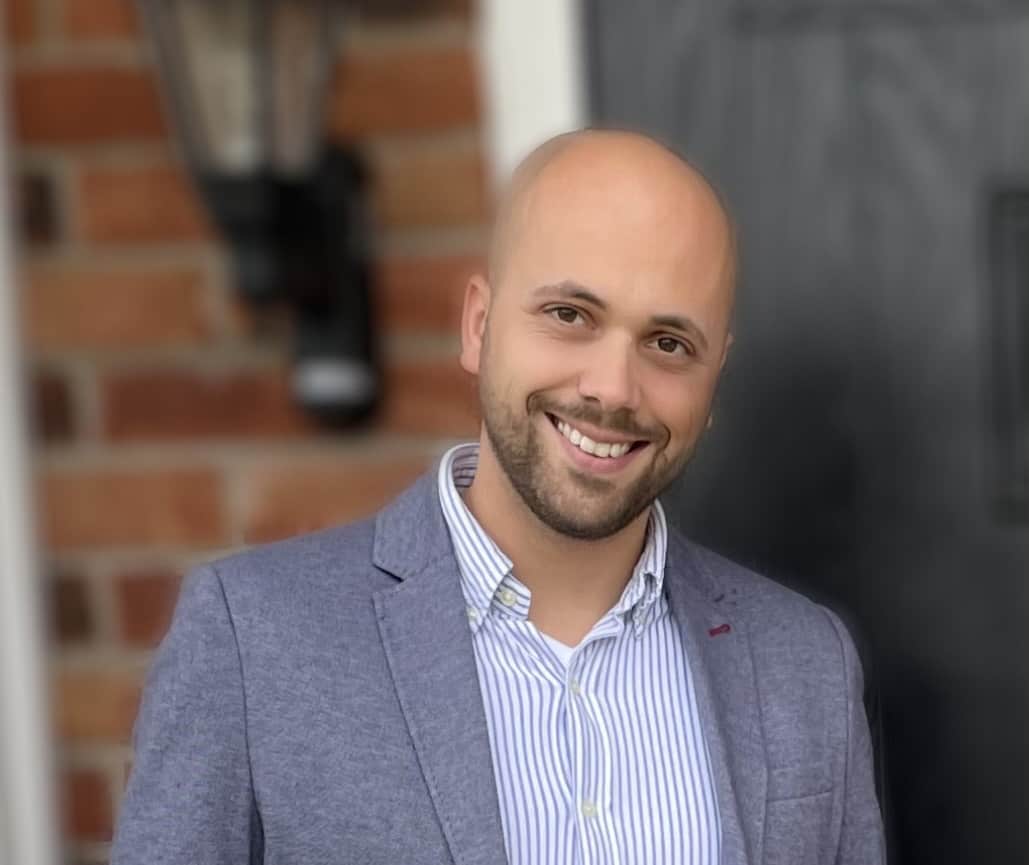

Hiring into a busy finance team can be challenging, but there are some tips you can heed to make the most of your recruitment process and find the best talent for your company. Luke Higgs, Regional Director for SRM, had the pleasure of speaking with Jody Rolfe, Finance Director (Commercial) at TUI about his current role, his advice for those looking to hire finance professionals and how to get the most from your recruitment partner of choice.
I’ve been at TUI in total for a decade now. My current role is Finance Director for all things commercial in the UK; what I like to describe as the “fun stuff of finance”. We’re involved in all the strategy, all the trading and finance decisions that the business makes. We really pride ourselves on being right next to the business, as close as we can be, helping them to make the best possible decisions by looking both backwards, forwards and at our competitors.
The team is now at around 40 people and is split into four sub-teams. Our commercial team is heavily based on the different areas of TUI’s business; our Crystal Ski business, the Ireland business, our main TUI Tour Operator and finally, our River Cruise business. That area of the finance team supports the commercial function in setting trading targets, looking at our margins and cost bases, thinking about our budgets and decisions around ancillaries etc. We also have a sales and marketing team; their role in the finance team is to partner with the sales and marketing function, to make sure we sell as many holidays in the most efficient and best way as we possibly can. We have an overheads team that look at the various costs in delivering all those things, so head office costs, staff costs and all the decisions around people. There have been some real positive movements in that area recently too, such as improved maternity and paternity pay options for our staff. Our final team is the FP&A team – they bring everything together for all the UK, working with areas outside of our direct control such as the Airline and Group functions, to bring an overall picture of where we’re going, what we’re looking like, what our reporting looks like. It’s all quite fun and very interesting.
Personally I’ve had many different roles across those different teams at TUI over the last decade, with a brief stint at a major UK supermarket for about 18 months in between. But I believe TUI has something very special about it and a lovely culture. SRM Recruitment know us very well - you hopefully understand why so many of us have been here for so long.
We’ve definitely become more of a Group, and less of a UK market. We’ve been starting to leverage economies of scale and looking at how we can do things together. Internally, we often talk our team using the analogy of a F1 car and every different market has its own driver. Personally, I like to think I’m Lewis Hamilton! Basically, we all have the same car but with slight modifications – so the systems we use, the tools we use, the IT infrastructure and strategy we have is broadly the same, and the car therefore is broadly the same – but it’s tweaked for each individual driver (and therefore market) to get the absolute maximum out of it.
This is where I’ve seen things change the most – but it allows you to spend more than you would individually on these things and hopefully get something better out it. Of course, it sometimes creates some internal conflict, because every driver wants their car to be the best and angled especially for them, but ultimately it does work better, so that’s probably where I’ve seen things change the most.
We’ve ended up with smaller local teams in some areas and bigger teams in Group functions elsewhere, but it does create a lot of opportunity for movement. Many of us have worked in local and Group teams, myself included. You get to really understand what other markets are doing and it’s great from a personal perspective too – it involves meeting people from different cultures, different areas of the business and markets, and also allows us to travel, which is ultimately what our business is all about…travel!
I’d say our biggest challenge is that we paused our graduate and apprenticeship schemes during the pandemic, so there was a bit of a gap in the pipeline for us. Normally we’d have people who’d have been in the business for a couple of years and were ready to rotate and move up and with several years of experience. This gap meant that we had some holes, especially as the business started to grow again post-pandemic.
Finding people in the market who are the right fit for us has been especially hard. It’s easier to find people with the right CV and right level of experience, but I’ve found the most challenging thing is finding those people who are the right fit for the business; those who will enjoy and work well with us and stay for a few years and be part of the TUI culture and grow with us. That’s something that is really hard to test in an interview, in a CV or an application process or LinkedIn profile. You need to invest time in your interview process and selection criteria to find the right type of person who will fit well in the team. We have lots of different types of people across our business, and we try to make sure they’ll fit well into the team and benefit from what TUI has to offer. That’s definitely been a huge challenge for us.
Firstly, I like to be open and honest in an interview process, I see it very much a two-way street. It’s not just if we want you as a candidate – it’s also if you want us, and I love it when someone really wants to work with us. It’s so important we’re open and honest and don’t sell a dream that’s not there. I like to be open with people about the experiences they’ll get and the challenges they might face when they come in, just as I expect them to be open with us about their CV, experience and what they expect from us.
Secondly, just getting time to meet people. In our post-pandemic world, it’s very easy to not meet people face-to-face or to just have a shorter Teams call. We’re all working back-to-back with meetings and trying to the find the right time to invest in the right person. But I’ve found investing the extra three or four hours finding the right person is much easier than recruiting the wrong people or hiring the person who isn’t quite right for the role. It’s always worth investing the time in recruitment. We as leaders are only as good as the people below us, so it’s really important we get it right.
Similar to my point above, it’s about the quality of the relationship. When I speak about making sure we’re getting the right people – this refers to a recruitment partner too. It’s about making sure a recruiter is listening to what it is you’re after, they understand what your business is and can be open and honest with the candidate well before you get to meet with them.
It can be very time consuming doing direct hiring – you can have 20-30-40 CVs for just one role – but being able to have a personal conversation with all of those people for an hour is a week of my time I can’t just carve out for every role. So having a partnership with a recruiter who really understands what you’re looking for, who understands how your business works who can do that initial detailed screening for you…well, it becomes invaluable and a real investment and one you can depend on over and over again. It’s about being transparent, having a good relationship, and being able to pick up the phone. You need to be able to talk to them regularly, to know you’ve got a partner, and not just someone who can send you more CVs than what you may already have.
I think SRM and TUI have been working together for just over 18 months now, and in my team alone we’ve already had three roles come through from SRM. This tells a story in itself - we don’t have a high turnover of staff at TUI, so most of our external roles have been working directly with SRM. And it’s a massive benefit of that relationship – everyone you’ve put forward to us has had the right understanding of what our business is, what it’ll be like to work with us, and they have fitted in really well.
I know other areas of the business (such as our airlines business) have also been reaching out and finding the benefits of the bespoke service you offer and that real understanding of the businesses you work with. Even though SRM has been growing too, we still feel like we’re getting the same very personal service. We’ve been very pleased with the people we’ve hired from SRM. In fact, only this morning we’ve been talking internally about passing over a bit more responsibility to a more recent staff member in our sales and marketing team from next month. We’re very keen on internal promotion and progression here at TUI, and that very much applies to people we’ve recruited through SRM.
Q: Jody, first of all, tell us a bit about your role as Finance Director at TUI?
I’ve been at TUI in total for a decade now. My current role is Finance Director for all things commercial in the UK; what I like to describe as the “fun stuff of finance”. We’re involved in all the strategy, all the trading and finance decisions that the business makes. We really pride ourselves on being right next to the business, as close as we can be, helping them to make the best possible decisions by looking both backwards, forwards and at our competitors.
The team is now at around 40 people and is split into four sub-teams. Our commercial team is heavily based on the different areas of TUI’s business; our Crystal Ski business, the Ireland business, our main TUI Tour Operator and finally, our River Cruise business. That area of the finance team supports the commercial function in setting trading targets, looking at our margins and cost bases, thinking about our budgets and decisions around ancillaries etc. We also have a sales and marketing team; their role in the finance team is to partner with the sales and marketing function, to make sure we sell as many holidays in the most efficient and best way as we possibly can. We have an overheads team that look at the various costs in delivering all those things, so head office costs, staff costs and all the decisions around people. There have been some real positive movements in that area recently too, such as improved maternity and paternity pay options for our staff. Our final team is the FP&A team – they bring everything together for all the UK, working with areas outside of our direct control such as the Airline and Group functions, to bring an overall picture of where we’re going, what we’re looking like, what our reporting looks like. It’s all quite fun and very interesting.
Personally I’ve had many different roles across those different teams at TUI over the last decade, with a brief stint at a major UK supermarket for about 18 months in between. But I believe TUI has something very special about it and a lovely culture. SRM Recruitment know us very well - you hopefully understand why so many of us have been here for so long.
Q: How has the finance team grown and changed since you joined TUI?
We’ve definitely become more of a Group, and less of a UK market. We’ve been starting to leverage economies of scale and looking at how we can do things together. Internally, we often talk our team using the analogy of a F1 car and every different market has its own driver. Personally, I like to think I’m Lewis Hamilton! Basically, we all have the same car but with slight modifications – so the systems we use, the tools we use, the IT infrastructure and strategy we have is broadly the same, and the car therefore is broadly the same – but it’s tweaked for each individual driver (and therefore market) to get the absolute maximum out of it.
This is where I’ve seen things change the most – but it allows you to spend more than you would individually on these things and hopefully get something better out it. Of course, it sometimes creates some internal conflict, because every driver wants their car to be the best and angled especially for them, but ultimately it does work better, so that’s probably where I’ve seen things change the most.
We’ve ended up with smaller local teams in some areas and bigger teams in Group functions elsewhere, but it does create a lot of opportunity for movement. Many of us have worked in local and Group teams, myself included. You get to really understand what other markets are doing and it’s great from a personal perspective too – it involves meeting people from different cultures, different areas of the business and markets, and also allows us to travel, which is ultimately what our business is all about…travel!
Q: What do you think is the biggest challenge when hiring finance professionals in the current market?
I’d say our biggest challenge is that we paused our graduate and apprenticeship schemes during the pandemic, so there was a bit of a gap in the pipeline for us. Normally we’d have people who’d have been in the business for a couple of years and were ready to rotate and move up and with several years of experience. This gap meant that we had some holes, especially as the business started to grow again post-pandemic.
Finding people in the market who are the right fit for us has been especially hard. It’s easier to find people with the right CV and right level of experience, but I’ve found the most challenging thing is finding those people who are the right fit for the business; those who will enjoy and work well with us and stay for a few years and be part of the TUI culture and grow with us. That’s something that is really hard to test in an interview, in a CV or an application process or LinkedIn profile. You need to invest time in your interview process and selection criteria to find the right type of person who will fit well in the team. We have lots of different types of people across our business, and we try to make sure they’ll fit well into the team and benefit from what TUI has to offer. That’s definitely been a huge challenge for us.
Q: What tips do you have for others looking to hire into their Finance teams?
Firstly, I like to be open and honest in an interview process, I see it very much a two-way street. It’s not just if we want you as a candidate – it’s also if you want us, and I love it when someone really wants to work with us. It’s so important we’re open and honest and don’t sell a dream that’s not there. I like to be open with people about the experiences they’ll get and the challenges they might face when they come in, just as I expect them to be open with us about their CV, experience and what they expect from us.
Secondly, just getting time to meet people. In our post-pandemic world, it’s very easy to not meet people face-to-face or to just have a shorter Teams call. We’re all working back-to-back with meetings and trying to the find the right time to invest in the right person. But I’ve found investing the extra three or four hours finding the right person is much easier than recruiting the wrong people or hiring the person who isn’t quite right for the role. It’s always worth investing the time in recruitment. We as leaders are only as good as the people below us, so it’s really important we get it right.
Q: What advice do you have for anyone thinking about working with a recruiter and how to get the most from the partnership?
Similar to my point above, it’s about the quality of the relationship. When I speak about making sure we’re getting the right people – this refers to a recruitment partner too. It’s about making sure a recruiter is listening to what it is you’re after, they understand what your business is and can be open and honest with the candidate well before you get to meet with them.
It can be very time consuming doing direct hiring – you can have 20-30-40 CVs for just one role – but being able to have a personal conversation with all of those people for an hour is a week of my time I can’t just carve out for every role. So having a partnership with a recruiter who really understands what you’re looking for, who understands how your business works who can do that initial detailed screening for you…well, it becomes invaluable and a real investment and one you can depend on over and over again. It’s about being transparent, having a good relationship, and being able to pick up the phone. You need to be able to talk to them regularly, to know you’ve got a partner, and not just someone who can send you more CVs than what you may already have.
Q: Why do you choose to partner with SRM?
I think SRM and TUI have been working together for just over 18 months now, and in my team alone we’ve already had three roles come through from SRM. This tells a story in itself - we don’t have a high turnover of staff at TUI, so most of our external roles have been working directly with SRM. And it’s a massive benefit of that relationship – everyone you’ve put forward to us has had the right understanding of what our business is, what it’ll be like to work with us, and they have fitted in really well.
I know other areas of the business (such as our airlines business) have also been reaching out and finding the benefits of the bespoke service you offer and that real understanding of the businesses you work with. Even though SRM has been growing too, we still feel like we’re getting the same very personal service. We’ve been very pleased with the people we’ve hired from SRM. In fact, only this morning we’ve been talking internally about passing over a bit more responsibility to a more recent staff member in our sales and marketing team from next month. We’re very keen on internal promotion and progression here at TUI, and that very much applies to people we’ve recruited through SRM.